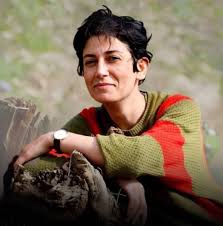
On August 4th, 2023, Pakhshan Azizi was sentenced to death in the Evin Prison. Charged with an “armed rebellion against the state” and “membership of opposition groups,” Azizi was simply a social worker for Kurdish refugees running from ISIS in Iraq and Syria.
The Evin Prison is quite infamous in Iran for condemning political prisoners, journalists, academics, human rights activities, and even foreign citizens deemed to be spies or spreading propaganda to severe punishments. They do not shy from torture methods such as forced confessions, beatings, electrical shocks, solidarity confinements, sleep deprivation, sexual abuse, and even denial of medical care to female citizens. During her stay, Azizi was subjected to psychological and physical torture, no family visits, no legal representation, and her family was temporarily detained for forced confessions. She was alleged to be leading riots and clashes with guards, but this has yet to be confirmed.
The Kurds’ situation is quite complicated. In short, they inhabit regions along Turkey, Iraq, Syria, and Iran. They are the fourth largest ethnic group in the Middle East, but do not permanently hold a state. Because of struggles in Syria and Iraq with terrorist groups and civil war, many run to Iran for asylum/shelter but instead face deportation, imprisonment, and executions by the Iranian government. They have also been in an on/off struggle with Iran for autonomy for quite a while now.
Many experts, such as the East Kurdistan National Centre (NNRK), urge the removal of Azizi’s sentence and to ultimately end the harassment of women activists. The NNRK specifically condemns the death sentence, demands fair trials, highlights oppression, supports humanitarian efforts, and pressures for policy change such as the end to apartheid policies and the respect for human rights.
Iran’s political climate holds no room for women. There have been over 900 deaths in just 2024 by execution, and an increase in the number of women facing these sentences. Individuals describe the environment to be a place of “heightened persecution” and “continued intention to punish and silence communities with a climate of fear.” Pakhshan Azizi’s case, a terrifying reality, parallels the broader oppression faced by women in Iran and the larger Middle East.
 Boundless HER