‘Meri Jism Meri Marzi.’
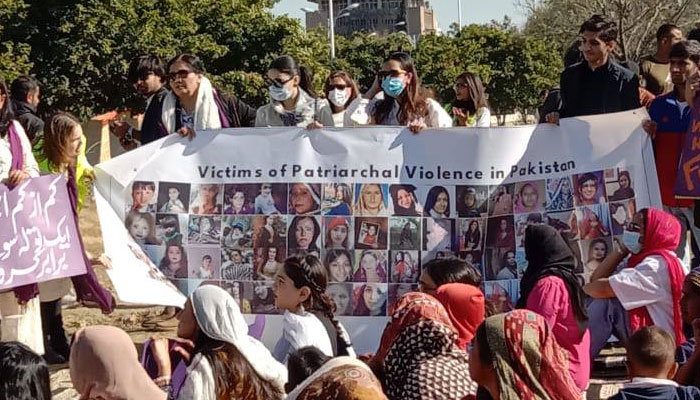
The chant, “my body, my choice,” overtakes the streets during the 2025 Pakistan Aurat March. The Aurat March is an annual demonstration hosted on National Women’s Day (March 8th), called Aurat Multan, and Mother’s Day (May 11th), Aurat Karachi Mirdukhas. A symbol of strength and resilience herself, Night Said Khan leads thousands of women, men, and transgendered individuals from her wheelchair. Their main intentions are to protest the patriarchy and advocate for women’s rights.
The Fight
The night before the protest, Aurat March Islamabad (AMI) take to a press conference demanding an end to gender-based violence, end to political persecution, end to sexual abuse, the rights to inheritance, the right to form unions so that companies recognize their rights, and protection for Afghan refugees as they repeatedly face false accusations for extremist and illegal activities. They wish to declare this a national emergency and for government officials and citizens to hold a zero-tolerance policy against these injustices.
The theme of this year’s protest is “feminist politics vs. the patriarchal state.” Specifically, they are highlighting the women who defied the military dictatorship of General Zia-Ul-Haq. This dictator is famous for his Islamization for Pakistan and the contributor to the lack of women’s rights such as covering heads in public spaces, a lowered participation in the sports and arts, and the indifference rape victims face in court (if only given a testimony it is deemed as a confession to sexual intercourse outside of lawful marriage). Additionally, the AMI is strongly against child marriages. About 19 million girls currently enter marriage in Pakistan before the legal age of 18, and acts of violence against transgender.
The Public Reaction
As retaliation, their strength is recognized as a spread of vulgarity. Officials and family members intimidate women’s attendance; however, those who are brave enough to show up, though the AMI has sought amendments in blasphemy laws, are taken straight to the courts charged for blasphemy. Observers often throw stones and women faces blockades, detentions, and baton charges by security forces.
Asma Amir, women’s rights activist, describes their problem of reduced marches. Many find the Aurat march’s slogans controversial – misinterpreting narratives on social media. Though engagement with the protest has increased, the negative backpack overshadows their mission statements. This protest shines the path for more marches to follow in bits place – a catalyst showing women that they deserve the right to stand up for themselves.
Creativity
The feminist community finds its solidarity in many forms. There are voting booth stations featuring statements that women hear on the daily bases and encouraging marchers to cast their votes for the statements that they had personally heard. These stations also featured the voices of women whose community prevented them from joining the movement.
In paint or pen, women take to the ‘Wall of Rage,’ featuring slogans and mantras of hope, as well as stories of harassment and abuse lasting generations. These same messages are also carried around in purple banners, acting as a symbol of hope.
The Takeaway
Around the world, women are stripped of their individuality, their choice, their freedom of expression. Through a desperate retaliation they hope for some recognition, some change, some spark in the communities around them to join their cause.
How can we help? Share the movement. Share the story. In this way, we are a part of the protest worldwide.
 Boundless HER